

Is Animal Research Used All Over The World?
Effectually half the diseases in the world have no treatment. Understanding how the body works and how diseases progress, and finding cures, vaccines or treatments, tin take many years of painstaking work using a broad range of research techniques. In that location is overwhelming scientific consensus worldwide that some enquiry using animals is all the same essential for medical progress. Animate being inquiry in the UK is strictly regulated. For more details on the regulations governing enquiry using animals, go to the United kingdom regulations folio.
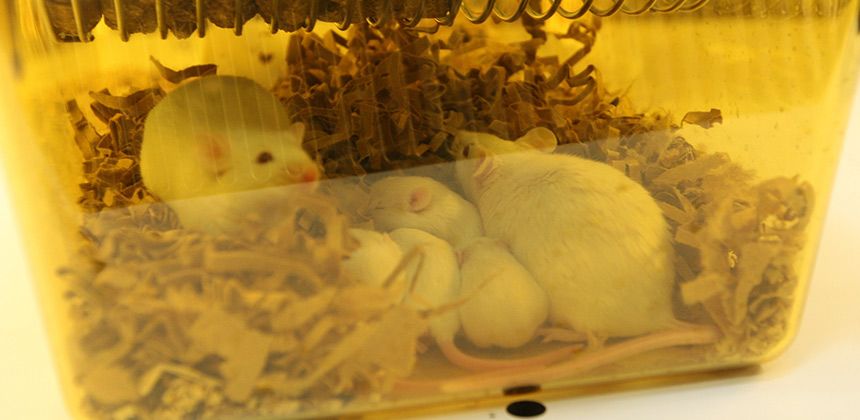
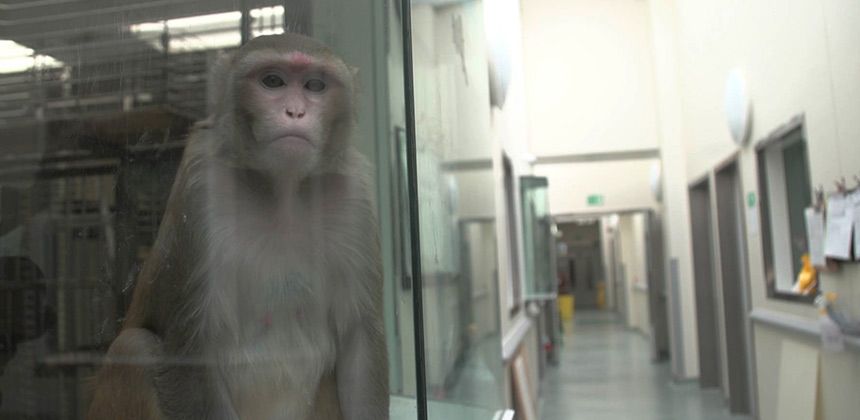
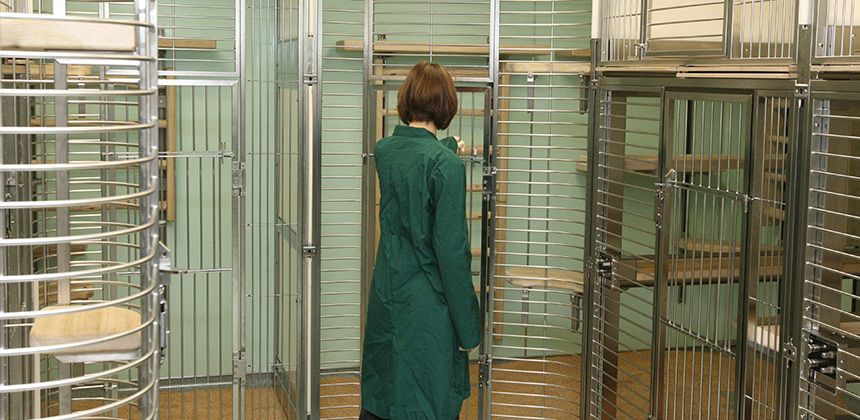
Credit: OU There is overwhelming scientific consensus worldwide that some animals are still needed in guild to brand medical progress. Where animals are used in research projects, they are used as part of a range of scientific techniques. These might include human trials, computer modelling, cell civilization, statistical techniques, and others. Animals are only used for parts of inquiry where no other techniques can deliver the answer. A living trunk is an extraordinarily complex system. You cannot reproduce a beating eye in a test tube or a stroke on a computer. While we know a lot well-nigh how a living trunk works, there is an enormous amount nosotros simply don't know: the interaction between all the different parts of a living system, from molecules to cells to systems similar respiration and circulation, is incredibly circuitous. Fifty-fifty if nosotros knew how every element worked and interacted with every other element, which we are a long way from understanding, a calculator hasn't been invented that has the ability to reproduce all of those complex interactions - while conspicuously yous cannot reproduce them all in a test tube. While humans are used extensively in Oxford enquiry, in that location are some things which it is ethically unacceptable to use humans for. There are also variables which yous tin control in a mouse (like diet, housing, make clean air, humidity, temperature, and genetic makeup) that y'all could not control in homo subjects. Well-nigh people believe that in order to achieve medical progress that will salvage and improve lives, perchance millions of lives, limited and very strictly regulated creature use is justified. That belief is reflected in the police, which allows for fauna enquiry but under specific circumstances, and which sets out strict regulations on the use and care of animals. It is correct that this continues to be something society discusses and debates, but there has to exist an understanding that without animals we tin can just make very limited progress against diseases like cancer, heart assault, stroke, diabetes, and HIV. It's worth noting that animal research benefits animals too: more than half the drugs used past vets were developed originally for human medicine. No. Just by being very complex living, moving organisms they share a huge corporeality of similarities with humans. Humans and other animals accept much more in common than they accept differences. Mice share over xc% of their genes with humans. A mouse has the aforementioned organs as a human, in the aforementioned places, doing the same things. Almost of their bones chemistry, prison cell structure and bodily system are the same as ours. Fish and tadpoles share enough characteristics with humans to make them very useful in research. Even flies and worms are used in inquiry extensively and have led to research breakthroughs (though these species are not regulated past the Dwelling house Office and are not in the Biomedical Sciences Building). The sorts of procedures research animals undergo vary, depending on the enquiry. Breeding a genetically modified mouse counts as a procedure and this represents a large proportion of all procedures carried out. So does having an MRI (magnetic resonance image) browse, something which is painless and which humans undergo for health checks. In some circumstances, being trained to become through a maze or beingness trained at a computer game also counts as a procedure. Taking blood or receiving medication are pocket-size procedures that many species of animate being tin can be trained to do voluntarily for a nutrient advantage. Surgery accounts for only a small-scale minority of procedures. All of these are examples of procedures that go on in Oxford'southward Biomedical Sciences Building. Credit: PA Photocall Figures for 2021 testify numbers of animals that completed procedures, equally declared to the Domicile Role using their five categories for the severity of the process. Not-recovery 2966 232 two 41 0 ane 1 28 0 0 162 0 3433 Mild 32601 157 0 14 0 0 iii 131 7 0 5066 71 38050 Moderate 31074 309 half dozen 0 0 10 0 0 0 0 214 0 31613 Astringent 852 68 0 0 0 2 0 0 0 one 630 327 1880 Sub-threshold 130415 422 1 0 0 0 0 0 0 0 1378 0 132216 Total 197908 1188 9 55 0 xiii 4 159 7 1 7450 398 207192 # NHPs - Non Man Primates Oxford likewise maintains breeding colonies to provide animals for use in experiments, reducing the need for unnecessary transportation of animals. Figures for 2017 bear witness numbers of animals bred for procedures that were killed or died without being used in procedures: 8851 2000 23721 34572 762 0 0 762 59 0 0 59 384 0 0 384 Primates account for nether half of one per cent (0.five%) of all animals housed in the Biomedical Sciences Building. They are only used where no other species can evangelize the inquiry answer, and we continually seek ways to replace primates with lower orders of animal, to reduce numbers used, and to refine their housing conditions and enquiry procedures to maximise welfare. All the same, at that place are elements of inquiry that can only be carried out using primates because their brains are closer to homo brains than mice or rats. They are used at Oxford in vital research into brain diseases like Alzheimer's and Parkinson's. Some are used in studies to develop vaccines for HIV and other major infections. Credit: OU The primates at Oxford spend most of their time in their housing. They are housed in groups with access to play areas where they can groom, fodder for food, climb and swing. Primates at Oxford involved in neuroscience studies would typically spend a couple of hours a solar day doing behavioural work. This is sitting in front of a estimator screen doing learning and memory games for food rewards. No suffering is involved and indeed many of the primates appear to find the games stimulating. They come into the transport cage that takes them to the calculator room entirely voluntarily. Afterwards some time (a menstruum of months) demonstrating normal learning and memory through the games, a primate would have surgery to remove a very small amount of brain tissue nether anaesthetic. A full course of painkillers is given under veterinary guidance in the same way every bit whatsoever human being surgical procedure, and the animals are upwardly and about once more within hours, and back with their group within a solar day. The brain harm is minor and unnoticeable in normal behaviour: the brute interacts normally with its group and exhibits the usual natural behaviours. In order to find out about how a disease affects the brain information technology is not necessary to induce the equivalent of full-blown illness. Indeed, the more specific and small the brain expanse affected, the more focussed and valuable the inquiry findings are. The primate goes back to behavioural testing with the computers and differences in performance, which get apparent through these advisedly designed games, are monitored. At the end of its life the animal is humanely killed and its brain is studied and compared directly with the brains of deceased human patients. Primates at Oxford involved in vaccine studies would simply accept a vaccination and and so have monthly blood samples taken. Credit: PA Photocall *From 2014 the Home Office changed the fashion in which animals/ procedures were counted. Figures up to and including 2013 were recorded when procedures began. Figures from 2014 are recorded when procedures terminate. Primates (macaques) at Oxford would typically spend a couple of hours a day doing behavioural work, sitting in front end of a computer screen doing learning and retentivity games for food rewards. This is not-invasive and done voluntarily for nutrient rewards and does non count as a procedure. After some time (a menstruation of months) demonstrating normal learning and retentivity through the games, a primate would have surgery under anaesthetic to remove a very pocket-size amount of brain tissue. The primate quickly returns to behavioural testing with the computers, and differences in performance, which go apparent through these carefully designed puzzles, are monitored. A primate which has had this surgery is counted equally 'on procedure'. Both stages are essential for research into understanding brain part which is necessary to develop treatments for conditions including Alzheimer'southward, Parkinson's and schizophrenia. Numbers vary yr on twelvemonth depending on the research that is currently undertaken. In general, the University is committed to reducing, replacing and refining creature enquiry. Numbers change daily so nosotros cannot give a fixed effigy, merely it is in that order. There are very many non-beast research methods, all of which are used at the Academy of Oxford and many of which were pioneered hither. These include research using humans; computer models and simulations; cell cultures and other in vitro work; statistical modelling; and big-calibration epidemiology. Every enquiry project which uses animals will also use other research methods in addition. Wherever possible not-creature research methods are used. For many projects, of course, this will mean no animals are needed at all. For others, there volition be an element of the research which is essential for medical progress and for which in that location is no alternative means of getting the relevant information. As the Section of Health states, inquiry on animals has contributed to about every medical advance of the last century. Without animal inquiry, medicine as nosotros know information technology today wouldn't exist. Information technology has enabled united states to find treatments for cancer, antibiotics for infections (which were developed in Oxford laboratories), vaccines to prevent some of the most mortiferous and debilitating viruses, and surgery for injuries, illnesses and deformities. Life expectancy in this state has increased, on average, by well-nigh three months for every year of the past century. Within the living memory of many people diseases such as polio, turberculosis, leukaemia and diphtheria killed or crippled thousands every year. Only at present, doctors are able to forbid or care for many more than diseases or carry out life-saving operations - all thanks to research which at some stage involved animals. Each year, millions of people in the United kingdom of great britain and northern ireland benefit from treatments that have been adult and tested on animals. Animals have been used for the development of claret transfusions, insulin for diabetes, anaesthetics, anticoagulants, antibiotics, heart and lung machines for open up heart surgery, hip replacement surgery, transplantation, high claret force per unit area medication, replacement middle valves, chemotherapy for leukaemia and life support systems for premature babies. More than 50 million prescriptions are written annually for antibiotics. Yes. While we are committed to reducing, replacing and refining brute research every bit new techniques make it possible to reduce the number of animals needed, in that location is overwhelming scientific consensus worldwide that some research using animals is still essential for medical progress. It only forms one element of a whole research programme which will use a range of other techniques to observe out whatever possible without animals. Animals would be used for a specific element of the research that cannot exist conducted in whatsoever alternative way. The development of drugs and medical technologies that help to reduce suffering among humans and animals depends on the carefully regulated apply of animals for research. In the 21st century scientists are standing to work on treatments for cancer, stroke, heart disease, HIV, malaria, tuberculosis, diabetes, neurodegenerative diseases like Alzheimer's and Parkinson'due south, and very many more than diseases that cause suffering and death. Genetically modified mice play a crucial role in future medical progress as understanding of how genes are involved in illness is constantly increasing.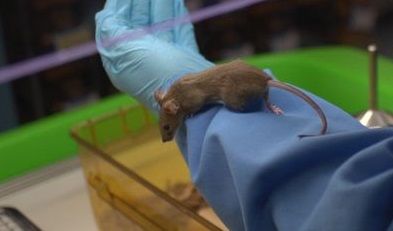 Mouse being handled
 Why is beast research necessary?
Is it morally right to use animals for inquiry?
Aren't animals too unlike from humans to tell united states of america anything useful?
What does research using animals actually involve?
 Mouse pups
 How many animals are used?
Severity
Mice
Rats
Ferrets
Guinea Pigs
Rabbits
NHPs#
Pigs
Other rodents
Other birds
Xenopus
Zebrafish
Other fish
Total
* Badgers are caught, tagged and released for monitoring in the wild as part the work of the Wildlife Conservation Research Unit (WildCRU).
Total excluding those involved in creation or maintenance of a GA line
Genetically normal animals killed as a result of creation of a new GA line
All animals (other than previously reported) killed for the maintenance of established GA lines
Total
Mice
Rats
Xenopus
Zebrafish
Why must primates be used?
 Primate in lab
 What is done to primates?
 Housing for primates
 How many primates does Oxford hold?
Year Total number of primates held (number at mid-indicate of twelvemonth) Number of primates on process (equally recorded in almanac Home Office returns) 2004 109 20 2005 109 22 2006 100 49 2007 99 39 2008 86 66 2009 98 49 2010 80 41 2011 55 22 2012 46 29 2013 41 45 2014 38 5* 2015 l 2* 2016 52 eight 2017 54 vii 2018 52 ten What'south the difference between 'total held' and 'on procedure'?
Why has the overall number held gone down?
Y'all say primates account for under 0.v% of animals, so that ways y'all have at to the lowest degree sixteen,000 animals in the Biomedical Sciences Edifice in full - is that right?
Aren't there alternative inquiry methods?
How have humans benefited from research using animals?
We may have used animals in the past to develop medical treatments, but are they really needed in the 21st century?
How will humans benefit in future?
Source: https://www.ox.ac.uk/news-and-events/animal-research/research-using-animals-an-overview
Posted by: machadodazint78.blogspot.com
0 Response to "Is Animal Research Used All Over The World?"
Post a Comment